
Ai shine
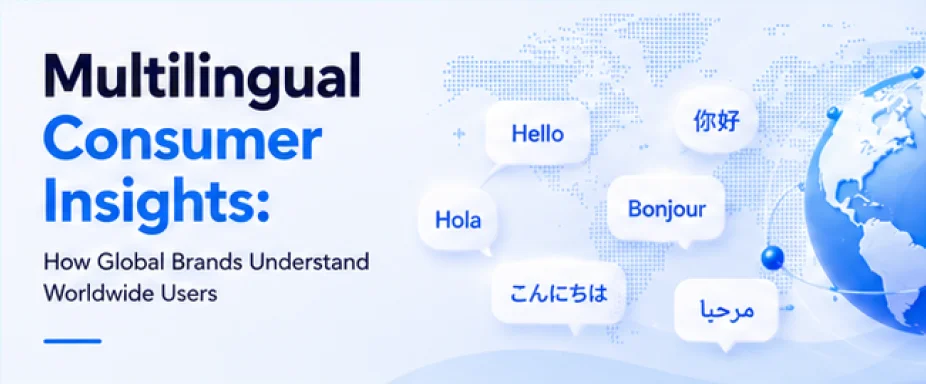
Multilingual Consumer Insights: How Global Brands Understand Worldwide Users

Multilingual Consumer Insights: How Global Brands Understand Worldwide Users

by AI SHINE

Home>Blog>Social Listening & Consumer Insights>Multilingual Consumer Insights: How Global Brands Understand Worldwide Users

Introduction

As more consumer-facing brands expand globally, a critical mistake keeps repeating: treating global users as a single group. You might have a great product, a polished brand image, and a solid domestic strategy—but if you can't understand what users are saying in their native language, you'll miss the core of their needs, misinterpret their feedback, and lose out to local competitors who "speak their language."

Multilingual consumer insights aren't just about translating comments from one language to another. It's about decoding the cultural context, emotional nuances, and localized preferences hidden in every conversation—whether it's a review in Spanish, a TikTok comment in Thai, or a forum post in Arabic. For global brands, this isn't an optional extra; it's the foundation of building trust, adapting to local markets, and driving sustainable growth overseas.

In this post, we'll break down practical, actionable methods to capture and analyze multilingual consumer insights—helping you move beyond translation, truly understand global users, and turn their voices into effective business strategies. We'll focus on real challenges出海 brands face, avoid empty jargon, and optimize for search terms that global marketers and brand managers actually use.
1. Start with "Local Language First" – Ditch Literal Translation Traps

The biggest barrier to multilingual listening is relying on literal translation tools (e.g., Google Translate) that strip away context and emotion. A phrase that's neutral in English might be offensive in Mandarin; a compliment in French could sound dismissive in Japanese. To truly understand users, you need to prioritize local language listening—not just translating after the fact.

Action Step: Use social listening tools with built-in multilingual support that can recognize slang, idioms, and cultural references. For example, the Spanish phrase "está muy chulo" doesn't just mean "it's very cool"—it carries a casual, youthful tone that resonates with Gen Z in Spain and Latin America. A good tool will capture that nuance, not just the literal meaning.

Pro Tip: For key markets (e.g., Southeast Asia, Europe, the Middle East), partner with local linguists or cultural consultants to review insights. They can spot subtle cues—like regional preferences for product names or emotional triggers—that AI tools might miss.

2. Map Local Channels – Where Global Users Actually Talk

Global users don't all gather on Instagram and Twitter. Different regions have their own go-to platforms, and that's where the most authentic multilingual insights live. Ignoring these local channels means missing out on unfiltered feedback and emerging trends.

Here's a quick guide to key regions and their core channels:

· Southeast Asia: TikTok (Thai, Indonesian, Vietnamese), Lazada/Shopee review sections, Facebook Groups (local community-focused)

· Europe: Instagram (French, German, Italian), Reddit (niche communities), Trustpilot (detailed reviews in local languages)

· Middle East: Instagram, Snapchat (Arabic), Twitter/X (local influencers), regional forums (e.g., Souq.com reviews)

· Latin America: TikTok, Instagram, WhatsApp Groups (private, unfiltered conversations), MercadoLibre reviews

Action Step: Audit your target markets to identify the top 2-3 local channels per region. Prioritize these for multilingual listening, as they'll give you more authentic insights than global platforms alone.

3. Mine Localized Keywords – Speak the Language of Your Users

Users in different regions don't search for or talk about products the same way. A "moisturizer" in English might be "hidratante" in Spanish, but in Mexico, users might use "crema hidratante para la piel seca" (moisturizing cream for dry skin) more frequently. These localized keywords are critical for both social listening and SEO—they help you find users and rank for the terms they actually use.

Action Step: Use multilingual keyword research tools to collect region-specific terms related to your product, pain points, and trends. Group them by language and region, then use these keywords to set up your social listening queries. For example, a skincare brand targeting South Korea should include keywords like "피부 트러블 해결" (solve skin troubles) and "저자극 화장품" (mild cosmetics).

4. Decode Cultural Nuances – Emotion Translates Differently

Emotion is universal, but how it's expressed varies wildly by culture. A user in Japan might express dissatisfaction subtly ("This product is not bad, but it could be better"), while a user in Brazil might be more direct ("This product didn't work for me"). Failing to decode these cultural nuances leads to misinterpreting sentiment and missing key needs.

Example: A Western fashion brand launched a red dress in China, expecting it to sell well (red symbolizes luck in Western culture). But Chinese users left comments like "too bright for daily wear" and "not suitable for work"—because in China, red is associated with festivals, not everyday clothing. By listening to these multilingual comments and understanding the cultural context, the brand adjusted its marketing to position the dress as a festival piece, boosting sales.

Pro Tip: Create a "cultural nuance guide" for each target market, highlighting how users express positive/negative sentiment, key cultural taboos, and preferred communication styles. Share this guide with your team to ensure insights are interpreted correctly.

5. Segment Insights by Region & Language – Avoid "One Size Fits All"

A trend in one region doesn't mean it will resonate in another. Even within the same language (e.g., Spanish in Spain vs. Spanish in Mexico), preferences and pain points can differ drastically. Segmenting your multilingual insights by region and language helps you avoid generic strategies and tailor your approach to each market.

Action Step: Use your social listening tool to segment data by two criteria: language (e.g., French, Arabic, Indonesian) and region (e.g., France vs. Morocco, Indonesia vs. Malaysia). This allows you to:

· Identify region-specific trends (e.g., Southeast Asian users prefer travel-sized products, while European users prioritize sustainability).

· Spot regional pain points (e.g., Middle Eastern users complain about long delivery times, while Latin American users care about price).

· Tailor products and marketing to each region's needs.

6. Turn Multilingual Feedback into Localized Action

Collecting multilingual insights is useless if you don't act on them. The goal is to turn comments in different languages into tangible changes that resonate with local users. This means adapting your product, marketing, and customer service to fit each region's needs.

Examples of actionable steps:

· If users in Germany complain about "unclear product instructions" (in German), translate and simplify your instructions for the German market.

· If users in Thailand mention "wanting more shade options" (in Thai), add region-specific shades to your product line.

· If users in the Middle East praise your "fast customer service" (in Arabic), highlight this in your local marketing campaigns.

Pro Tip: Assign a local contact or team for each key market to oversee the implementation of insights. They'll ensure changes are culturally appropriate and aligned with local user expectations.

7. Build a Multilingual Insight Repository – Scale Your Strategy

As you expand into more markets, keeping track of multilingual insights can become chaotic. A centralized repository helps you organize data, spot cross-region trends, and avoid repeating mistakes. This repository should be accessible to all teams (marketing, product, customer service) and updated regularly.

What to include in your repository:

· Localized keywords and phrases (by language/region).

· Key insights and trends (e.g., "Indonesian users want more affordable options").

· Cultural nuances and taboos to avoid.

· Action taken and results (e.g., "Added Thai language support—positive comments increased by 25%").

Action Step: Use a cloud-based tool to build your repository, and schedule monthly updates to add new insights. This will help you scale your multilingual listening strategy as you enter new markets.

Conclusion

For出海 brands, understanding global users isn't about speaking their language—it's about listening to it. Multilingual consumer insights are the key to breaking through cultural barriers, building trust, and standing out in crowded global markets. By ditching literal translation, focusing on local channels, decoding cultural nuances, and acting on localized feedback, you can turn every multilingual comment into a opportunity to connect with users and drive growth.

Remember: Global success starts with local listening. The brands that truly understand their global users are the ones that don't just sell products—they build relationships. And that starts with hearing what users are really saying, in their own language.

Next Steps

· Identify your top 3 target overseas markets and their primary languages.

· Set up multilingual social listening queries using localized keywords for each market.

· Partner with local linguists or cultural consultants to review initial insights.

· Implement one localized action (e.g., updating product descriptions, adding a local language option) and track its impact.