
Ai shine
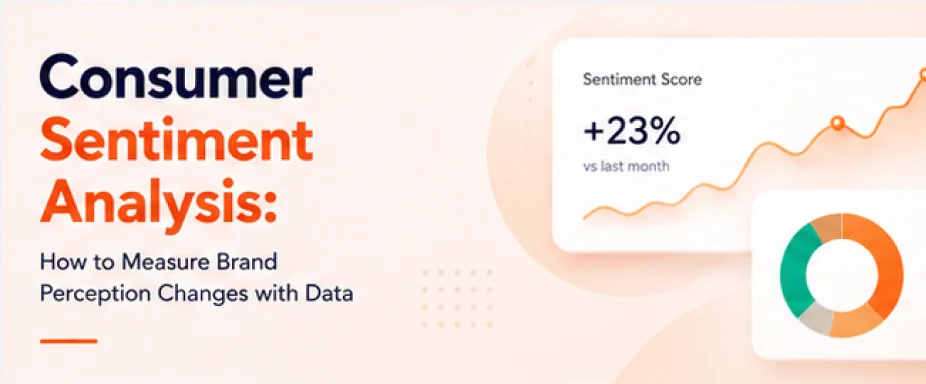
Consumer Sentiment Analysis: How to Measure Brand Perception Changes with Data

Consumer Sentiment Analysis: How to Measure Brand Perception Changes with Data

by AI SHINE

Home>Blog>Social Listening & Consumer Insights>Consumer Sentiment Analysis: How to Measure Brand Perception Changes with Data

Introduction

Brand perception is fragile. One viral negative review, a misstep in a campaign, or even a shift in consumer expectations can turn positive sentiment into frustration—often before you notice. For consumer-facing brands, tracking sentiment isn't just about counting positive vs. negative mentions; it's about understanding how and why brand perception shifts, and acting fast to maintain trust.

Many brands make the mistake of treating sentiment analysis as a one-and-done task: "We have 70% positive sentiment—we're good." But sentiment is dynamic, not static. A 5% drop in positive mentions over a week could signal a growing issue; a sudden spike in neutral sentiment might mean your brand is becoming irrelevant.

In this post, we'll show you how to move beyond basic sentiment tracking to analyze consumer emotions in context, spot perception shifts early, and use those insights to keep your brand aligned with what your audience cares about.
1. Define What "Sentiment" Means for Your Brand (It's Not One-Size-Fits-All)

Sentiment isn't just "positive" or "negative"—it's a spectrum of emotions that vary by industry, brand, and audience. Before you start analyzing, define what sentiment categories matter most to your business:

Core Emotions: Joy, frustration, disappointment, excitement, anger, trust (tailor these to your brand—e.g., a luxury skincare brand might prioritize "trust" and "delight," while a budget grocery brand focuses on "satisfaction" and "relief").

Contextual Sentiment: Sentiment tied to specific touchpoints: product quality, customer service, pricing, packaging, or campaign messaging.

Intensity: Mild (e.g., "it's okay") vs. extreme (e.g., "this ruined my day").

Example: A coffee brand might define sentiment categories as: "excitement" (about new flavors), "satisfaction" (taste/price), "frustration" (availability/staff), and "disappointment" (quality consistency). This specificity ensures you're tracking what actually impacts your brand's perception.

2. Use AI-Powered Tools to Capture Nuance (Avoid Human Bias)

Manual sentiment analysis is time-consuming and prone to bias—one team member might label a sarcastic comment as "positive," while another calls it "negative." AI-powered social listening tools solve this by:

· Analyzing unstructured data (comments, reviews, DMs) at scale—thousands of mentions in minutes.

· Detecting nuance: sarcasm, irony, and mixed emotions (e.g., "I love the design but hate the battery life" is both positive and negative).

· Tagging sentiment by context (e.g., "slow delivery" is negative about customer service, not product quality).

Pro Tip: Choose a tool that lets you train custom models for your brand's language—slang, industry jargon, and brand-specific terms (e.g., a fitness brand's "gainz" or a beauty brand's "dewy finish") will be more accurately categorized.

3. Track Sentiment Over Time (Spot Trends, Not Fluctuations)

A single day of negative mentions doesn't mean your brand is in trouble—but a consistent downward trend does. To measure meaningful perception changes, track sentiment over time using these metrics:

Daily/Weekly Sentiment Score: Average sentiment (e.g., 0.7 on a scale of -1 to 1, where 1 = extremely positive) to spot sudden spikes/drops.

Sentiment Trend Line: Track changes over weeks or months to identify patterns (e.g., positive sentiment rises after a new product launch, then dips due to supply chain issues).

Mention Volume vs. Sentiment: A surge in mentions + a drop in positive sentiment = a potential crisis (e.g., a product recall).

Example: A fashion brand noticed positive sentiment dropped from 75% to 60% over two weeks, while mention volume doubled. Digging deeper, they found users were complaining about a new sizing policy—allowing them to reverse the policy before sentiment dropped further.

4. Segment Sentiment by Audience (Not All Opinions Are Equal)

Your brand's perception varies by audience segment—what frustrates Gen Z might delight boomers, and vice versa. Segment sentiment by:

Demographics: Age, gender, location (e.g., consumers in urban areas might care more about sustainability than those in rural areas).

Customer Journey Stage: New customers (first impressions) vs. loyal customers (long-term satisfaction) vs. churned customers (pain points that drove them away).

Platform: Sentiment on TikTok (casual, trend-driven) vs. Amazon (product-focused, detailed reviews) vs. Twitter/X (real-time, emotional).

This segmentation helps you prioritize: if your core audience (e.g., 25–34-year-old parents) is expressing frustration, that's a higher priority than a small group of non-target users.

5. Dig Into the "Why" Behind Sentiment Shifts

A sentiment drop is a symptom—not the problem. To fix it, you need to understand the root cause. Ask:

· What specific topics are driving the shift? (Product quality? Customer service? A controversial post?)

· Which users are most affected? (Loyal customers? New buyers? Influencers?)

· Is the shift tied to an external event? (A competitor launch? A viral trend? A global issue?)

Example: A pet food brand saw a sudden drop in positive sentiment. Instead of panicking, they analyzed the comments and found users were concerned about a new ingredient. They quickly released a statement explaining the ingredient's safety and shared third-party testing results—restoring positive sentiment within a week.

6. Compare Sentiment to Competitors (Benchmark Your Perception)

Your brand's sentiment doesn't exist in a vacuum. To understand how you stack up, compare your sentiment to direct competitors. Ask:

· Is our positive sentiment higher or lower than competitors? Why?

· What are competitors doing well that we're not? (e.g., better customer service, more transparent messaging)

· Are competitors facing the same sentiment shifts? (e.g., an industry-wide supply chain issue vs. a brand-specific mistake)

Benchmarking helps you avoid complacency—even if your sentiment is positive, if competitors are outperforming you, it's a sign to improve.

7. Turn Sentiment Insights Into Action (Don't Let Data Gather Dust)

The goal of sentiment analysis isn't to collect data—it's to improve your brand. For every sentiment insight, create a clear action plan:

Positive Sentiment: Double down on what's working. If users love your packaging, highlight it in marketing campaigns; if customer service is praised, train your team to maintain that standard.

Negative Sentiment: Address the root cause. If users complain about slow support, add more agents; if a product feature is frustrating, update it.

Neutral Sentiment: Re-engage. Neutral sentiment often means your brand is "forgettable"—create content or offers that spark emotion (excitement, trust, joy).

Pro Tip: Share sentiment insights with every team—marketing, product, customer service, and leadership. This ensures everyone is aligned on what users care about.

Conclusion

Consumer sentiment is the pulse of your brand. It tells you what's working, what's not, and how to stay connected to your audience. By moving beyond basic positive/negative tracking to analyze nuance, trends, and context, you can spot perception shifts early, address issues before they escalate, and build a brand that resonates emotionally.

Remember: Sentiment analysis isn't a one-time task—it's an ongoing process. The more you listen, the more you understand, and the stronger your brand's relationship with consumers becomes.

Next Steps

· Audit your current sentiment tracking process—are you capturing nuance and context?

· Set up custom sentiment categories for your brand and audience.

· Schedule weekly sentiment reports to track trends and share insights with your team.

· Test a new action based on sentiment data (e.g., address a top complaint) and measure the impact on perception.